Proper disposal of needles and clinical waste protects you, your family, and waste collection workers from serious health risks. Around 16 billion injections are administered worldwide every year, creating massive amounts of sharps waste that requires careful handling. This guide covers everything you need to know about safe disposal methods for clinical waste in the UK.
Understanding Clinical Waste and Sharps
Clinical waste includes any waste that may contain infectious materials, blood, or bodily fluids. Used needles are classified as "sharps waste," a high-risk clinical waste category that can transmit over 30 different bloodborne pathogens, including HIV and hepatitis B and C.
💉 Reduce Sharps Injuries by 80%
UK legislation compliance training for safe needle and sharps collection
📉 80% Risk Reduction
⚖️ Legal Compliance
🎯 CPD Accredited
🛡️ Bloodborne Safety
Join Our Sharps Training Course
Essential for high-risk environment workers
What Counts as Clinical Waste
The following items require special disposal:
Sharps waste: needles, syringes, lancets, and any sharp medical instruments
Contaminated items: dressings, swabs, gloves contaminated with blood or bodily fluids
Medical supplies: stoma bags, incontinence pads, and sanitary towels with infectious material
Pharmaceuticals: unused medications and prescription drugs
Even single-use items like syringes become hazardous waste after use and cannot go in household waste bins.
Why Proper Disposal Matters
Inappropriate disposal of clinical waste poses serious risks. Even a single needlestick injury can cost thousands in post-exposure testing, vaccinations, and medical monitoring. Inappropriate disposal of needles in general waste bins has been linked to rising numbers of public needlestick injuries, especially among refuse workers.
Health and Legal Risks
Improper disposal puts humans at risk of bloodborne infections. Fines for improper disposal of clinical waste can reach tens of thousands of pounds, as it poses both environmental and public health risks. The responsibility for safe disposal falls on the person generating the waste.
Getting the Right Containers
Sharps Bins and Boxes
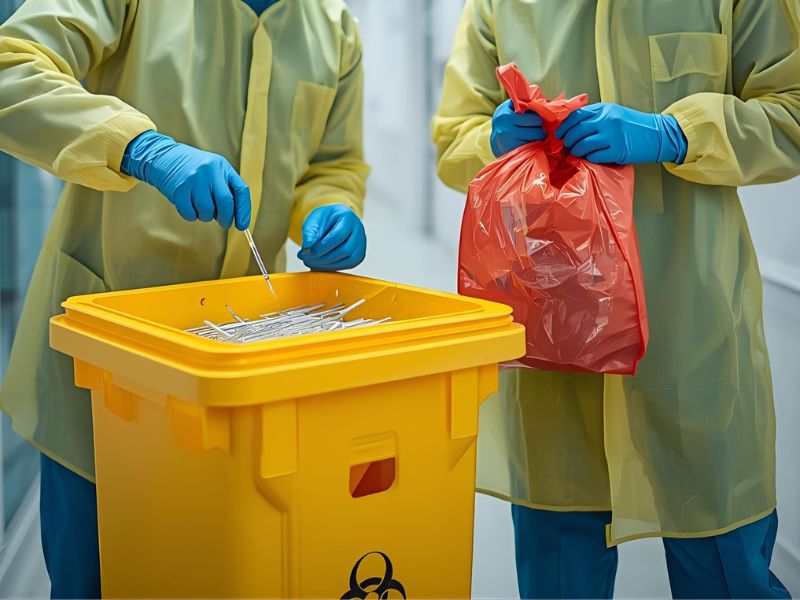
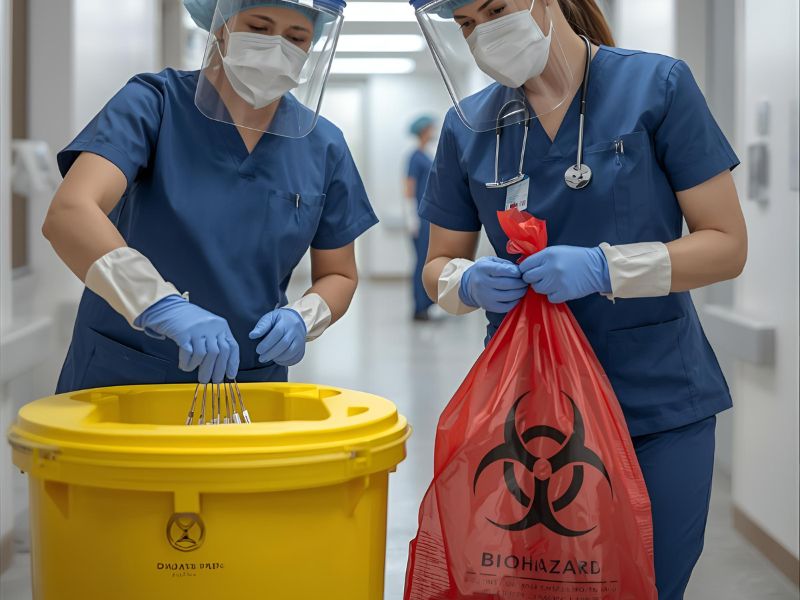
You need a proper sharps box for needles and other sharp clinical waste. Sharps bins are designed to be puncture-resistant, leak-proof, and colour-coded (often yellow with an orange or purple lid in the UK) to ensure correct segregation and disposal.
Some modern sharps containers feature in-built locking mechanisms to prevent tampering and reduce the risk of accidental exposure once full. Never reuse containers or try to empty them yourself.
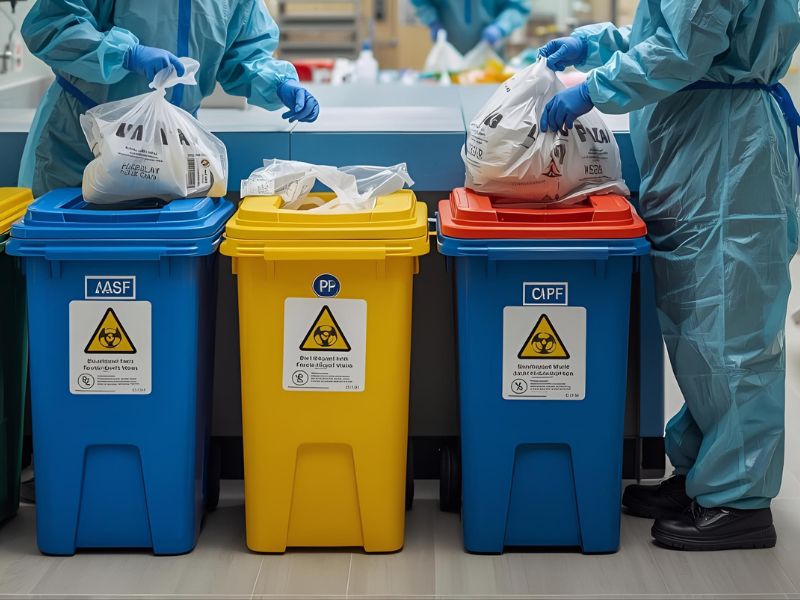
Colour-Coded Bags
In the UK, clinical waste is usually segregated into colour-coded bags:
Yellow bags: hazardous and infectious waste that requires incineration
Orange bags: infectious waste suitable for treatment (not necessarily incineration)
Purple bags: cytotoxic and cytostatic waste, often from chemotherapy
Non infectious waste can often go in standard waste, but check with your healthcare provider first.
Where to Get Sharps Containers
Local Pharmacy Services
Most local pharmacy locations provide sharps boxes for people who use needles at home. Many councils and local health authorities in the UK provide free sharps collection services for patients who use needles at home, such as those with diabetes. Simply contact your local pharmacy to arrange a collection or request a new container.
Healthcare Providers
Your GP surgery or healthcare provider can supply appropriate containers and arrange collections. They understand what type of container you need for different types of clinical waste.
Online Services
Some businesses provide online ordering and collection services for clinical waste disposal. These services ensure proper handling from your home to final disposal.
Safe Filling and Handling
Proper Filling Technique
Fill sharps boxes to the marked line only. Never overfill containers as this creates a safety hazard. Do not push items down or try to fit more in once the fill line is reached.
Place needles and syringes directly into the sharps box immediately after use. Do not recap needles or break them before disposal. Keep containers out of reach of children and members of the public.
Sealing and Storage
Once full, seal the container properly and do not attempt to reopen it. Store filled containers in a safe, secure location until collection date. Sealed containers should be kept away from children and pets.
Collection and Disposal Services
Arranging Collection
Contact your local council or healthcare provider to arrange a collection of filled containers. Many areas have regular collection schedules, while others work on a request basis. Some pharmacy locations accept filled sharps boxes for proper disposal.
What Happens During Collection
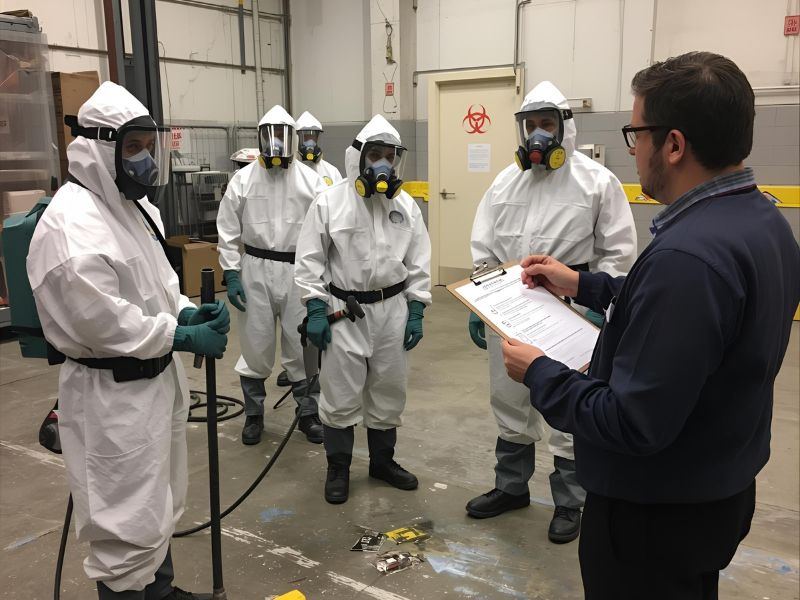
Professional waste collection services handle clinical waste using specialised vehicles and trained staff. Healthcare facilities generate an average of 0.5 to 2 kg of hazardous waste per bed per day, much of which requires specialised disposal.
Cost Considerations
Many NHS patients get free collection services through their healthcare provider. Private patients may need to pay a small charge for collection services. Contact your local council to find out about free services in your area.
Treatment and Final Disposal
Incineration Process
Incineration is still one of the most common disposal methods for hazardous medical waste, reaching temperatures of over 1,000°C to completely destroy pathogens. This process ensures complete elimination of infectious materials.
Alternative Treatment Methods
Recycling is possible for some clinical waste, but only after specialist sterilisation techniques such as autoclaving, which uses pressurised steam to neutralise pathogens. Some facilities use advanced treatment technologies that sterilise waste before standard disposal.
Environmental Considerations
Plastic syringes and sharps contribute to the global medical plastic waste problem, leading to growing investment in eco-friendly sharps disposal systems. Clinical waste makes up about 15% of all healthcare waste, with the rest usually being non-hazardous.
💉 Reduce Sharps Injuries by 80%
UK legislation compliance training for safe needle and sharps collection
📉 80% Risk Reduction
⚖️ Legal Compliance
🎯 CPD Accredited
🛡️ Bloodborne Safety
Join Our Sharps Training Course
Essential for high-risk environment workers
Special Situations and Guidance
Travel and Holidays
When travelling, carry a travel sharps box for any needles you might need. Some countries have different rules for clinical waste disposal, so check guidance before you visit international destinations.
Emergency Disposal
If you cannot access proper disposal services immediately, store filled containers safely until you can arrange a collection. Never put clinical waste in recycling bins or attempt to dispose through household waste.
Getting Advice and Support
Healthcare professionals can provide guidance on proper disposal methods. Local councils often have advice lines for clinical waste questions. If you are unsure about any aspect of disposal, always contact a healthcare professional for advice.
Common Mistakes to Avoid
Never attempt to dispose of clinical waste through normal household waste or recycling centres. Do not try to empty or reuse containers. Avoid putting contaminated items in standard waste bags.
Some people mistakenly think they can safely dispose of used needles by putting them in sealed bags. This is illegal and dangerous. Always use proper clinical waste disposal services.
Getting Started with Safe Disposal
The most important step is getting the right containers before you need them. Contact your local pharmacy or healthcare provider to arrange supply and collection services. Many people delay this until they have waste to dispose of, but preparation prevents problems.
Remember that safe disposal protects everyone in your community. Waste collection workers, recycling centres staff, and members of the public all benefit when clinical waste is handled responsibly.
For immediate help or if you need emergency disposal services, contact your local council or healthcare provider. They can provide guidance specific to your area and circumstances.
Ready to ensure safe disposal of your clinical waste? Contact Biohazard Cleaning Courses today for a free quote on professional clinical waste management services and training. We provide comprehensive guidance and services to keep your community safe.